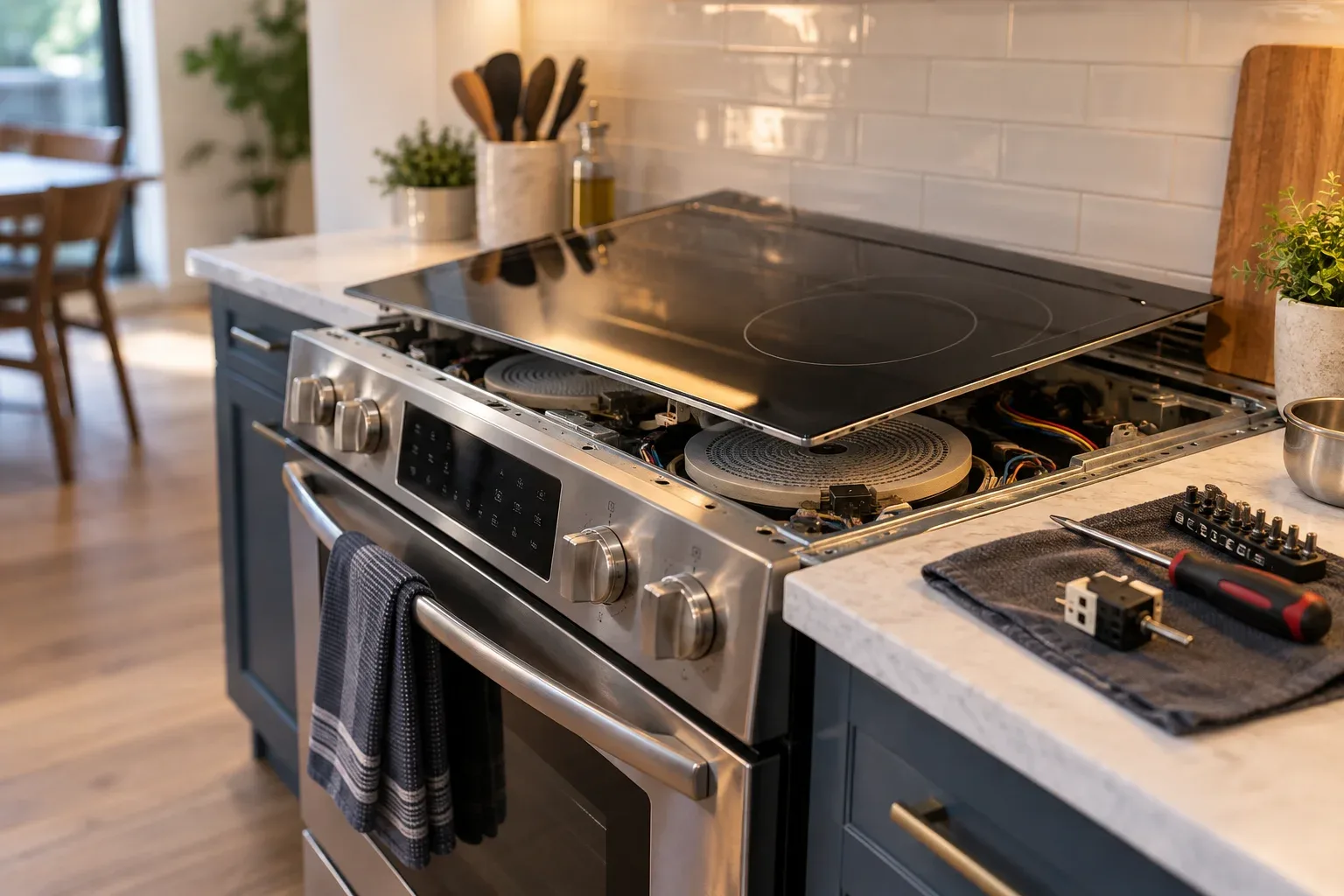
Burner not getting hot enough
The element may heat but remain below the expected temperature for the selected setting.
Does it heat slowly?
Is only one burner affected?
Stoves and cooktops rely on heating elements, temperature controls and electrical components. The way a burner behaves helps describe the problem.
A single element that does not heat is a different symptom from a cooktop where several cooking zones stop working or the whole appliance loses power.
A cooking zone may stay too hot, remain too cool or cycle in a way that feels different from normal operation.
Knobs, touch controls, indicators and displays can provide useful information about the issue.
Include the stove or cooktop brand, model number, which burner is affected and any displayed error code.
Tell us which cooking zone is affected, whether it heats at all and how the controls behave.
One cooking zone may remain completely cold even when a heat setting is selected.
The element may heat but remain below the expected temperature for the selected setting.
A cooking zone may continue heating after the control has been reduced or switched off.
Heat may fluctuate or feel inconsistent even when the same setting is selected.
The appliance may show no response or power up without allowing normal cooking.
Knobs, touch controls or selected settings may not respond as expected.
A hot-surface or burner indicator may remain illuminated longer than expected.
If sparking or a burning smell appears, stop using the affected cooking zone.
The exact issue depends on the appliance. Heating elements, controls, switches and sensors can all affect normal cooking performance.
Relevant when a cooking zone does not heat normally.
Control components influence selected heat levels and operation.
Temperature-related components affect how consistently heat is maintained.
Mechanical controls may need attention when settings do not respond normally.
Electronic cooktops may use touch panels and digital settings.
Electrical supply inside the appliance may be relevant when power is lost.
Indicator lights and error codes help describe appliance behaviour.
Control electronics can affect power, settings and cooking-zone operation.
Traditional coil elements use individual heating zones and mechanical controls.
Radiant elements heat beneath a glass-ceramic cooking surface.
Induction cooking uses electronic controls and magnetic heating zones.
The cooking surface is integrated into a freestanding range appliance.
Slide-in designs combine integrated controls with a built-in appearance.
Standalone cooktops are installed directly into the countertop.
Include the appliance brand and model number in your request when available.
“One burner stopped heating completely while the others were still working. It was easy to explain which cooking zone was affected when booking.”
“Our cooktop started heating differently on one side. I added the model number and described the temperature problem in the request.”
“The touch controls stopped responding normally. The booking form made it clear what appliance information to include.”
Request stove or cooktop repair for the address where the appliance is installed. Service is provided at the customer service address.
Share whether the burner heats, how the controls behave and any error codes or unusual operation you notice.
Fill in the details below to send your stove repair request.
Thank You!
Your message has been sent successfully. We'll get back to you shortly.